Close Menu
Automotive Testing Technology InternationalAutomotive Testing Technology International
  • News
    • A-H
      • ADAS & CAVs
      • Aerodynamics
      • Appointments, Partnerships, Investments & Acquisitions
      • Automotive Testing Expo
      • Batteries & Powertrain Testing
      • Component Testing
      • Safety and crash testing
      • Dynamometers
      • EMC & Electronics Testing
      • Emissions & Fuel Consumption
      • Facilities
      • Full-vehicle Testing
    • I-Z
      • Interiors & Infotainment Testing
      • Measurement Tools, Test Systems & Equipment
      • Motorsport
      • NVH & Acoustics
      • Proving Grounds
      • R&D
      • Sensors & Transducers
      • CAE, Simulation & Modeling
      • Software Engineering & SDVs
      • Tire Testing
  • Features
  • Online Magazines
    • November 2025
    • Crash Test Technology – 2025
    • September 2025
    • June 2025
    • March 2025
    • Automotive Testing Technology
    • Subscribe to Automotive Testing
    • Crash Test Technology
    • Subscribe to Crash Test Technology
  • Opinion
  • Awards
    • About
    • What’s new and key dates
    • Eligibility and nomination
    • Get in touch
    • Judges
    • Winner interviews
  • Videos
  • Supplier Spotlight
  • Proving Grounds
  • Events
LinkedIn Facebook X (Twitter)
  • Automotive Interiors
  • Automotive Powertrain
  • ADAS & Autonomous Vehicle
  • Professional Motorsport
  • Tire Technology
  • Media Pack
LinkedIn
Subscribe
Automotive Testing Technology InternationalAutomotive Testing Technology International
  • News
      • ADAS & CAVs
      • Aerodynamics
      • Appointments, Partnerships, Investments & Acquisitions
      • Automotive Testing Expo
      • Batteries & Powertrain Testing
      • Component Testing
      • Safety and crash testing
      • Dynamometers
      • EMC & Electronics Testing
      • Emissions & Fuel Consumption
      • Facilities
      • Full-vehicle Testing
      • Interiors & Infotainment Testing
      • Measurement Tools, Test Systems & Equipment
      • Motorsport
      • NVH & Acoustics
      • Proving Grounds
      • R&D
      • Sensors & Transducers
      • CAE, Simulation & Modeling
      • Software Engineering & SDVs
      • Tire Testing
  • Features
  • Online Magazines
    1. November 2025
    2. Crash Test Technology – 2025
    3. September 2025
    4. June 2025
    5. March 2025
    6. Automotive Testing Technology
    7. Subscribe to Automotive Testing
    8. Crash Test Technology
    9. Subscribe to Crash Test Technology
    Featured
    November 27, 2025

    In this Issue – November 2025

    Automotive Testing Technology By Web Team
    Recent

    In this Issue – November 2025

    November 27, 2025

    In this Issue – 2025

    October 7, 2025

    In this Issue – September 2025

    September 5, 2025
  • Opinion
  • Awards
    • About
    • What’s new and key dates
    • Eligibility and nomination
    • Get in touch
    • Judges
    • Winner interviews
    • ATTI Awards Forum
  • Videos
  • Supplier Spotlight
  • Proving Grounds
  • Events
LinkedIn
Subscribe
Automotive Testing Technology InternationalAutomotive Testing Technology International
Active Safety

Barriers and challenges of AV deployment

Sascha Semmler, head of innovation, autonomous mobility business area, ContinentalBy Sascha Semmler, head of innovation, autonomous mobility business area, ContinentalMay 9, 20223 Mins Read
Share LinkedIn Twitter Facebook Email
Sascha Semmler, head of innovation, autonomous mobility business area, Continental

From a developmental, infrastructural and regulatory perspective, the foundations for the rollout of autonomous driving have been laid, believes Sascha Semmler, head of innovation, autonomous mobility business area at Continental. Here he explains why.

Roughly 5-10 years ago, everyone looked forward to the introduction of fully automated and autonomous systems from 2020 through to 2025 – a very ambitious target. Then suddenly, 2020 approached and the introduction of these systems did not take place. The focus has massively shifted toward electromobility. As we look toward 2023 and beyond now, we can see a realistic path [for the introduction of autonomous vehicles]. Why? Because from an engineering perspective, we are able to tackle the critical use cases, which we were unable to do 5-10 years ago. We have a collaboration network with partners, and in terms of legislation, there are now standards and rules that allow us to drive on roads.

An important point, which should not be underestimated, is that these rules and regulations do not or should not fundamentally differ from country to country. This allows the development of one system that is in accordance with the legal regulations of many countries and can still be adapted to country-specific needs, instead of developing separate systems for different markets, which jeopardizes efficiency and standardization.

With regard to infrastructure, existing ADAS do not require any infrastructural changes at all. Furthermore, autonomous vehicles should be able to drive autonomously even without connection to the cloud, although there are additional benefits to doing so, such as knowing which potentially critical situations are approaching in the future, such as broken vehicles on the road, debris and intersections.

Physical versus virtual testing
There are two extremes related to testing – one is to test everything physically in the actual car or ECU, which is very expensive and slow; the other is to do intensive testing in the virtual environment. In reality, we combine these approaches in multiple ways. This allows much faster development of new modules and functions while ensuring strict safety measures.

Usefulness of artificial intelligence
When looking at AI, the amount of testing – given the increased number of functionalities and/or use cases – is increasing independently [whether AI is used in the development and the final product or not]. AI can help speed up the development cycles, but thorough testing must still be done. However, AI is a new key driver for enhanced functions and usability in the car and, therefore, fosters autonomous mobility.

From a developmental, infrastructural and regulatory perspective, the foundations for the rollout of autonomous driving have been laid, believes Sascha Semmler, head of innovation, autonomous mobility business area at Continental

Share. Twitter LinkedIn Facebook Email
Previous ArticleAutomated measurements in the lighting laboratory
Next Article Simulation allows for NVH assessment of EDUs at the model stage 
Sascha Semmler, head of innovation, autonomous mobility business area, Continental

Related Posts

CAE, Simulation & Modeling

BeyondMath raises US$18.5m to scale foundational physics AI model

February 27, 20262 Mins Read
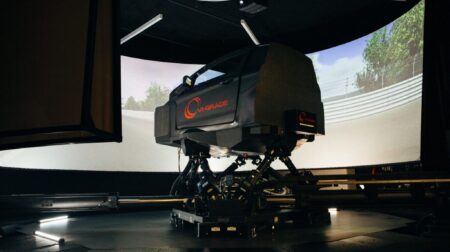
The VI-Grade DiM250 driving simulator.
CAE, Simulation & Modeling

VI-Grade installs first HyperDock in North America at Multimatic facility

February 18, 20262 Mins Read
A Renault vehicle on a testing platform.
Vehicle Development

Renault deploys nCode GlyphWorks to optimize durability testing and analysis

February 12, 20262 Mins Read
Latest News

BeyondMath raises US$18.5m to scale foundational physics AI model

February 27, 2026
Diagram demonstrating the Spirent Luma agentic AI solution for network testing and assurance, and the benefits it can bring.

Spirent launches agentic AI solution for network testing and assurance

February 25, 2026
ADQ35 multi-channel system.

Teledyne SP Devices launches 12bit ADQ35 digitizer

February 24, 2026
Free Weekly E-Newsletter

Receive breaking stories and features in your inbox each week, for free


Enter your email address:


Our Social Channels
  • LinkedIn
Getting in Touch
  • Free Weekly E-Newsletter
  • Meet the Editors
  • Contact Us
  • Media Pack
RELATED UKI TITLES
  • Automotive Interiors
  • Automotive Powertrain
  • ADAS & Autonomous Vehicle
  • Professional Motorsport
  • Tire Technology
  • Media Pack
© 2025 UKi Media & Events a division of UKIP Media & Events Ltd
  • Terms and Conditions
  • Privacy Policy
  • Cookie Policy
  • Notice & Takedown Policy
  • Site FAQs

Type above and press Enter to search. Press Esc to cancel.

We use cookies on our website to give you the most relevant experience by remembering your preferences and repeat visits. By clicking “Accept”, you consent to the use of ALL the cookies.
Cookie settingsACCEPT
Manage consent

Privacy Overview

This website uses cookies to improve your experience while you navigate through the website. Out of these, the cookies that are categorized as necessary are stored on your browser as they are essential for the working of basic functionalities of the website. We also use third-party cookies that help us analyze and understand how you use this website. These cookies will be stored in your browser only with your consent. You also have the option to opt-out of these cookies. But opting out of some of these cookies may affect your browsing experience.
Necessary
Always Enabled
Necessary cookies are absolutely essential for the website to function properly. These cookies ensure basic functionalities and security features of the website, anonymously.
CookieDurationDescription
cookielawinfo-checbox-analytics11 monthsThis cookie is set by GDPR Cookie Consent plugin. The cookie is used to store the user consent for the cookies in the category "Analytics".
cookielawinfo-checbox-functional11 monthsThe cookie is set by GDPR cookie consent to record the user consent for the cookies in the category "Functional".
cookielawinfo-checbox-others11 monthsThis cookie is set by GDPR Cookie Consent plugin. The cookie is used to store the user consent for the cookies in the category "Other.
cookielawinfo-checkbox-necessary11 monthsThis cookie is set by GDPR Cookie Consent plugin. The cookies is used to store the user consent for the cookies in the category "Necessary".
cookielawinfo-checkbox-performance11 monthsThis cookie is set by GDPR Cookie Consent plugin. The cookie is used to store the user consent for the cookies in the category "Performance".
viewed_cookie_policy11 monthsThe cookie is set by the GDPR Cookie Consent plugin and is used to store whether or not user has consented to the use of cookies. It does not store any personal data.
SAVE & ACCEPT