Close Menu
Automotive Testing Technology InternationalAutomotive Testing Technology International
  • News
    • A-H
      • ADAS & CAVs
      • Aerodynamics
      • Appointments, Partnerships, Investments & Acquisitions
      • Automotive Testing Expo
      • Batteries & Powertrain Testing
      • Component Testing
      • Safety and crash testing
      • Dynamometers
      • EMC & Electronics Testing
      • Emissions & Fuel Consumption
      • Facilities
      • Full-vehicle Testing
    • I-Z
      • Interiors & Infotainment Testing
      • Measurement Tools, Test Systems & Equipment
      • Motorsport
      • NVH & Acoustics
      • Proving Grounds
      • R&D
      • Sensors & Transducers
      • CAE, Simulation & Modeling
      • Software Engineering & SDVs
      • Tire Testing
  • Features
  • Online Magazines
    • November 2025
    • Crash Test Technology – 2025
    • September 2025
    • June 2025
    • March 2025
    • Automotive Testing Technology
    • Subscribe to Automotive Testing
    • Crash Test Technology
    • Subscribe to Crash Test Technology
  • Opinion
  • Awards
    • About
    • What’s new and key dates
    • Eligibility and nomination
    • Get in touch
    • Judges
    • Winner interviews
  • Videos
  • Supplier Spotlight
  • Proving Grounds
  • Events
LinkedIn Facebook X (Twitter)
  • Automotive Interiors
  • Automotive Powertrain
  • ADAS & Autonomous Vehicle
  • Professional Motorsport
  • Tire Technology
  • Media Pack
LinkedIn
Subscribe
Automotive Testing Technology InternationalAutomotive Testing Technology International
  • News
      • ADAS & CAVs
      • Aerodynamics
      • Appointments, Partnerships, Investments & Acquisitions
      • Automotive Testing Expo
      • Batteries & Powertrain Testing
      • Component Testing
      • Safety and crash testing
      • Dynamometers
      • EMC & Electronics Testing
      • Emissions & Fuel Consumption
      • Facilities
      • Full-vehicle Testing
      • Interiors & Infotainment Testing
      • Measurement Tools, Test Systems & Equipment
      • Motorsport
      • NVH & Acoustics
      • Proving Grounds
      • R&D
      • Sensors & Transducers
      • CAE, Simulation & Modeling
      • Software Engineering & SDVs
      • Tire Testing
  • Features
  • Online Magazines
    1. November 2025
    2. Crash Test Technology – 2025
    3. September 2025
    4. June 2025
    5. March 2025
    6. Automotive Testing Technology
    7. Subscribe to Automotive Testing
    8. Crash Test Technology
    9. Subscribe to Crash Test Technology
    Featured
    November 27, 2025

    In this Issue – November 2025

    Automotive Testing Technology By Web Team
    Recent

    In this Issue – November 2025

    November 27, 2025

    In this Issue – 2025

    October 7, 2025

    In this Issue – September 2025

    September 5, 2025
  • Opinion
  • Awards
    • About
    • What’s new and key dates
    • Eligibility and nomination
    • Get in touch
    • Judges
    • Winner interviews
    • ATTI Awards Forum
  • Videos
  • Supplier Spotlight
  • Proving Grounds
  • Events
LinkedIn
Subscribe
Automotive Testing Technology InternationalAutomotive Testing Technology International
CAE, Simulation & Modeling

How virtual verification can enhance physical testing

David Kelly, director, Drive System DesignBy David Kelly, director, Drive System DesignFebruary 22, 20224 Mins Read
Share LinkedIn Twitter Facebook Email
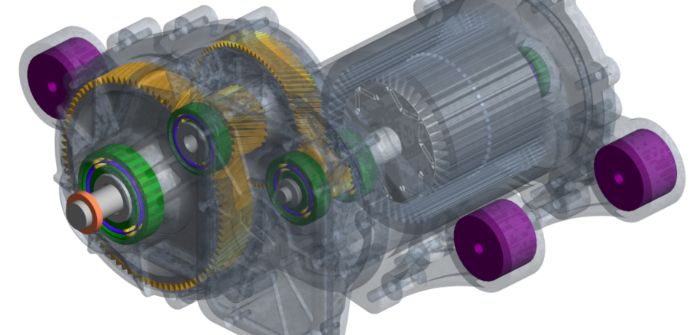
DSD simulation of an integrated electric drive unit

David Kelly, director, Drive System Design (DSD), explains how, when applied correctly, simulation or virtual testing can enhance and accelerate the hardware testing process. 

The speed at which the automotive sector is evolving has put further pressure on vehicle manufacturers to reduce their time to market for new products, cut the cost of prototypes and testing, and identify development risks in relatively immature electrified systems. As this has coincided with the greater availability, accessibility and accuracy of simulation tools, a growing trend is emerging in which early stage hardware testing is being replaced by sophisticated virtual models.

Used appropriately, simulation can make subsequent physical testing much more effective in several ways. Increased understanding of the design space early in the process permits faster convergence on a mature level of design, which means the testing downstream can be more focused, more efficient and more effective. As a recent example, we used complex CFD virtual verification to identify risks in the thermal performance of an electrified ‘A+’ sample system that allowed for a highly focused risk-based test phase that led to rapid definition of the vehicle test fleet prototype specifications.

The demand for high-quality data to support virtual modeling can also lead to improved communication between teams of specialists. The complex relationships in a hybrid/electric vehicle, for example, bring together thermal, mechanical, electromagnetic, software and other domains. Unlike a traditional approach in which each team contributes its hardware for testing, simulation demands a much more detailed and integrated level of information, earlier in the program, in order to facilitate building of the mathematical system models. This typically leads to greater exchange of critical data about the interfaces between the various system elements, and their individual characteristics.

While advances in modeling tools are allowing increasingly accurate simulations to be executed, this represents only half the story. As vehicles have become more complex, selecting the individual elements of a powertrain and arranging the architecture optimally has become increasingly challenging. Unlike traditional powertrain alternatives that were well understood and highly mature, today’s options are evolving rapidly, with even the core technology of elements such as motors and batteries subject to change. Managing the matrix of potential solutions and clearly identifying trends and trade-offs has become a significant challenge in itself. Before any detailed analysis is carried out, a reliable means to establish the optimum concept is required.

At DSD, we apply a systems engineering approach in order to establish the effects and requirements of the individual sub-systems on the overall system. This ensures that the requirements of the complete system are fully understood and protected during any trade-offs between individual elements. In the case of DSD, a tool developed in-house, EPOP (Electrified Powertrain Optimisation Process), evaluates the complex array of powertrain considerations such as cost, mass, performance, NVH, thermal and energy consumption and range, to derive the best candidates for either an application-specific or ‘product-family’ architecture and component specification. Only when the preferred architecture is identified does the more complex and detailed analysis take place.

Control software is another area that is increasingly important and a differentiating factor in modern electrified powertrains. When it comes to software, simulation is a critical step to achieve high functional maturity ahead of hardware-based testing, significantly reducing the time to develop, verify, validate and deploy a function. At DSD, our HIL (hardware-in-the-loop) testing facility integrates vehicle simulation over real-life scenarios and use cases, network simulation (CAN/Lin/Flexray), electrical fault injection, sensor and actuator electrical signatures and in-house-developed custom powertrain models with accurate representation of electrified system dynamics. Once the hardware is available on the test rig, the same driving scenarios, use cases and vehicle behavior can be linked to a dynamic rig replacing the simulation model of the electrified system. The latest, called ‘rig-in-the-loop’, allows the replication of realistic dynamic driving scenarios allowing an extensive validation of the software and hardware transients.

Ultimately, physical testing will always provide the final validation but the urgency of the market shift to electrified powertrains has intensified the need to develop new solutions more quickly. Simulation can provide the understanding necessary to deliver a ‘bigger bang for the buck’ from every hour of physical testing, meaning either shorter timescales or more comprehensive validation within a given timeframe. Continuous adjustment of these simulation models with the physical testing results then creates a ‘virtuous circle’ of improved quality of virtual verification within the immediate product cycle (so called ‘digital twin’) and enhanced processes to be applied to the next generation of systems, where expectations for performance will be greater still.

Share. Twitter LinkedIn Facebook Email
Previous Articleb-plus releases GPU add-on for BRICK measurement platform
Next Article NVH and EMC testing of the BMW i7 commences
David Kelly, director, Drive System Design

Related Posts

CAE, Simulation & Modeling

BeyondMath raises US$18.5m to scale foundational physics AI model

February 27, 20262 Mins Read
An automobile dash with a range of touchscreen displays and neon lights conveying how AI can assist in their design.
Appointments, Partnerships, Investments & Acquisitions

Antolin integrates Neural Concept’s AI engineering solutions to advance interior design

February 24, 20263 Mins Read
The VI-Grade DiM250 driving simulator.
CAE, Simulation & Modeling

VI-Grade installs first HyperDock in North America at Multimatic facility

February 18, 20262 Mins Read
Latest News

BeyondMath raises US$18.5m to scale foundational physics AI model

February 27, 2026
Diagram demonstrating the Spirent Luma agentic AI solution for network testing and assurance, and the benefits it can bring.

Spirent launches agentic AI solution for network testing and assurance

February 25, 2026
ADQ35 multi-channel system.

Teledyne SP Devices launches 12bit ADQ35 digitizer

February 24, 2026
Free Weekly E-Newsletter

Receive breaking stories and features in your inbox each week, for free


Enter your email address:


Our Social Channels
  • LinkedIn
Getting in Touch
  • Free Weekly E-Newsletter
  • Meet the Editors
  • Contact Us
  • Media Pack
RELATED UKI TITLES
  • Automotive Interiors
  • Automotive Powertrain
  • ADAS & Autonomous Vehicle
  • Professional Motorsport
  • Tire Technology
  • Media Pack
© 2025 UKi Media & Events a division of UKIP Media & Events Ltd
  • Terms and Conditions
  • Privacy Policy
  • Cookie Policy
  • Notice & Takedown Policy
  • Site FAQs

Type above and press Enter to search. Press Esc to cancel.

We use cookies on our website to give you the most relevant experience by remembering your preferences and repeat visits. By clicking “Accept”, you consent to the use of ALL the cookies.
Cookie settingsACCEPT
Manage consent

Privacy Overview

This website uses cookies to improve your experience while you navigate through the website. Out of these, the cookies that are categorized as necessary are stored on your browser as they are essential for the working of basic functionalities of the website. We also use third-party cookies that help us analyze and understand how you use this website. These cookies will be stored in your browser only with your consent. You also have the option to opt-out of these cookies. But opting out of some of these cookies may affect your browsing experience.
Necessary
Always Enabled
Necessary cookies are absolutely essential for the website to function properly. These cookies ensure basic functionalities and security features of the website, anonymously.
CookieDurationDescription
cookielawinfo-checbox-analytics11 monthsThis cookie is set by GDPR Cookie Consent plugin. The cookie is used to store the user consent for the cookies in the category "Analytics".
cookielawinfo-checbox-functional11 monthsThe cookie is set by GDPR cookie consent to record the user consent for the cookies in the category "Functional".
cookielawinfo-checbox-others11 monthsThis cookie is set by GDPR Cookie Consent plugin. The cookie is used to store the user consent for the cookies in the category "Other.
cookielawinfo-checkbox-necessary11 monthsThis cookie is set by GDPR Cookie Consent plugin. The cookies is used to store the user consent for the cookies in the category "Necessary".
cookielawinfo-checkbox-performance11 monthsThis cookie is set by GDPR Cookie Consent plugin. The cookie is used to store the user consent for the cookies in the category "Performance".
viewed_cookie_policy11 monthsThe cookie is set by the GDPR Cookie Consent plugin and is used to store whether or not user has consented to the use of cookies. It does not store any personal data.
SAVE & ACCEPT